


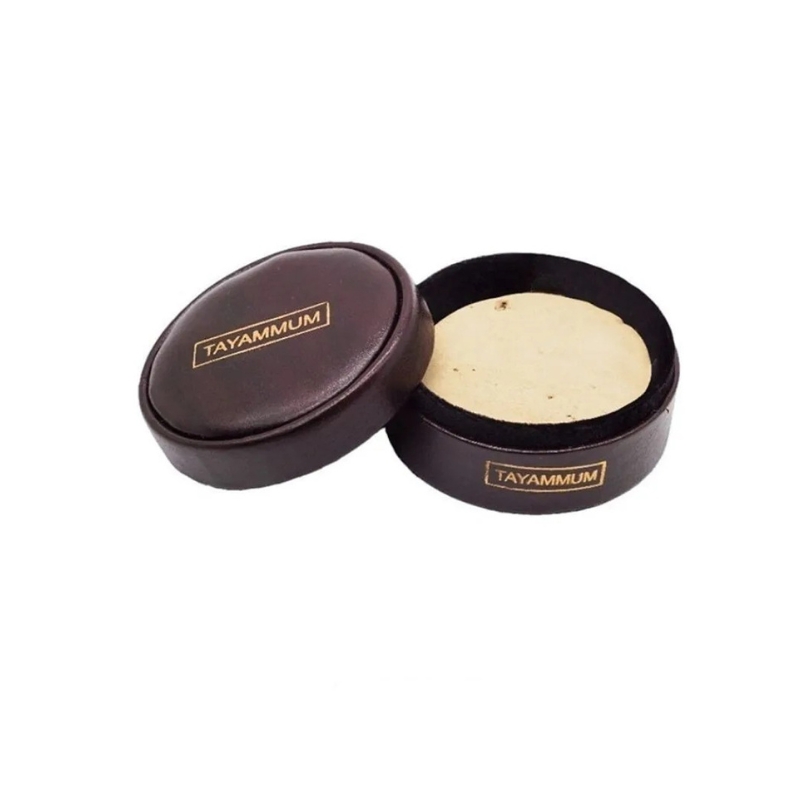
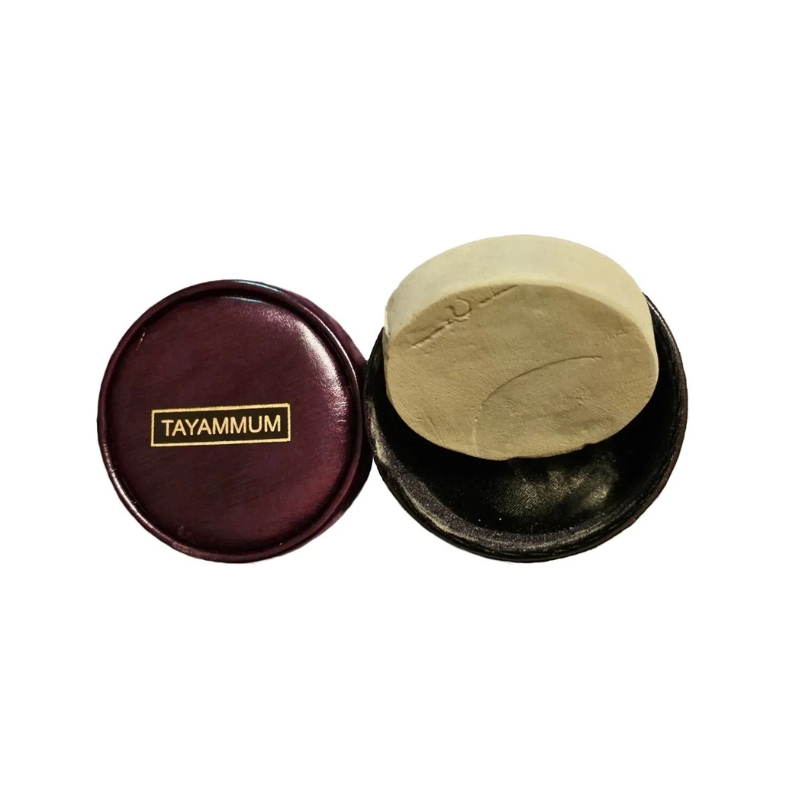
Description
Tayammum, or dry ablution, is the Islamic ritual purification using clean earth, sand, or dust as a substitute for water (wudu/ghusl) when water is scarce, dangerous to use, or harmful due to illness, involving striking the ground once, wiping the face, then wiping the hands to the wrists. It signifies an intention to purify for prayer when water isn’t available, following Quranic and prophetic traditions.
When to Perform Tayammum
- No Water Available: Water is genuinely unavailable or too difficult/dangerous to access.
- Illness/Harm: Using water would worsen a medical condition, like skin inflammation.
- Travel: While journeying, if water is not found.
How to Perform Tayammum (Sunnah Method)
- Intention & Bismillah: Make the intention (niyyah) for purification and say “Bismillah” (In the name of Allah).
- First Strike: Strike your palms once on a clean, natural surface (soil, sand, stone).
- Dust Off: Blow off any excess dust from your palms.
- Wipe Hands: Wipe the back of your right hand with your left palm, then the back of your left hand with your right palm (or interlace fingers for wiping arms as per some schools).
- Wipe Face: Wipe your entire face once with both hands.
- Second Strike (Optional/Different Schools): Some methods include a second strike for wiping the arms.
- Dua: Recite the same supplication (dua) as after regular ablution.
Key Points
- Surface: Must be clean earth, sand, dust, or stone.
- Purpose: A valid substitute for water-based purification.
- Validity: Remains valid as long as the reason (no water/illness) persists and the ablution isn’t invalidated.
Reviews
There are no reviews yet.